
Alopecia Areata Treatment in Delhi: Causes, Treatment Options & Regrowth Timeline
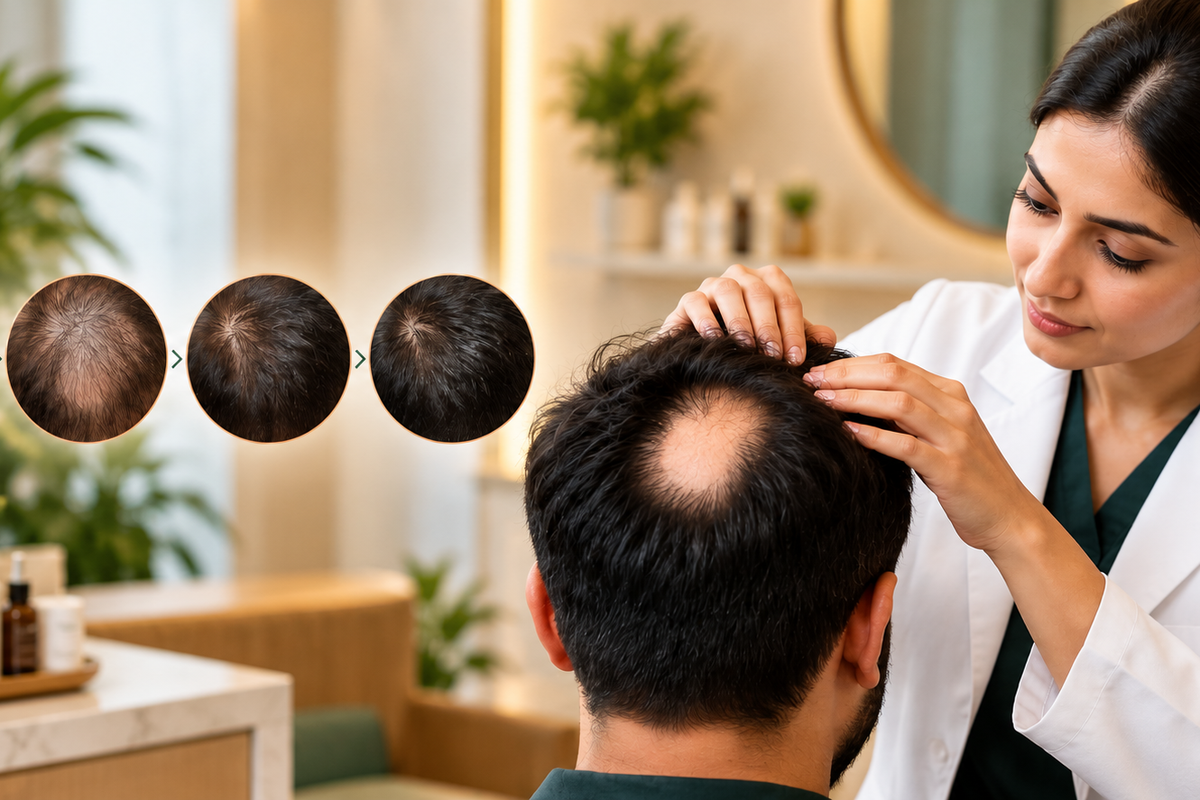
Noticing a sudden round or oval bald patch on your scalp can be worrying, especially when the rest of your hair appears completely normal. One possible cause is alopecia areata, an autoimmune condition that causes sudden, patchy hair loss.
The good news is that alopecia areata is a non-scarring form of hair loss, meaning the hair follicles are generally not permanently destroyed and regrowth may be possible. However, the condition can behave differently from one person to another, making proper diagnosis important.
If you’re searching for alopecia areata treatment in Delhi, understanding why it happens, what treatments are available, and how long hair regrowth may take can help you make informed decisions about your hair health.
What Is Alopecia Areata?
Alopecia areata is an autoimmune condition in which the immune system mistakenly attacks the hair follicles. This interrupts normal hair growth and can cause hair to fall out in clearly defined patches.
It most commonly affects the scalp but may also involve the beard, eyebrows, eyelashes, or other hair-bearing areas of the body.
Depending on the extent of hair loss, alopecia areata may appear in different forms:
- Patchy alopecia areata: One or several bald patches
- Alopecia totalis: Loss of all or almost all scalp hair
- Alopecia universalis: Extensive loss of hair across the body
At Iksana Wellness, alopecia areata is evaluated according to its pattern, severity and progression before a treatment plan is recommended. Best Dermatologist in Delhi
What Causes Alopecia Areata?
The exact reason why someone develops alopecia areata is not always clear.
The underlying mechanism is an abnormal immune response against the hair follicles. Genetics may also influence susceptibility, particularly in people with a family history of alopecia areata or other autoimmune disorders. Best Dermatologist in Delhi
Other factors may sometimes be associated with or investigated alongside hair loss, including stress, nutritional deficiencies, hormonal concerns and certain medical conditions.
However, stress should not automatically be considered the cause of every alopecia patch. A dermatologist can assess your medical history and hair-loss pattern and recommend further investigations when necessary.
How Do You Know If You Have Alopecia Areata?
Alopecia areata can develop surprisingly quickly.
Common signs include:
- Sudden round or oval bald patches
- Smooth skin where hair has fallen out
- Patchy hair loss without obvious scarring
- Short or broken hairs around the edge of a patch
- Patchy beard loss in men
- Eyebrow or eyelash hair loss
- Development of additional patches over time
Because several scalp conditions can cause hair loss, a professional diagnosis is important before beginning treatment.
What Are the Treatment Options for Alopecia Areata?
There is no single alopecia areata treatment that is suitable for every patient.
Treatment depends on factors such as the number and size of patches, how long they have been present, whether they are progressing and which areas are affected.
At Iksana Wellness, the existing alopecia treatment programme includes medical management, intralesional therapy, PRP and supportive hair-regeneration approaches selected according to individual requirements. Best Dermatologist in Delhi
1. Intralesional Therapy
For small or localized alopecia patches, a dermatologist may recommend targeted corticosteroid injections.
These are administered directly into affected areas to reduce the local immune reaction around the follicles and encourage hair regrowth.
The treatment is generally performed over multiple appointments rather than as a one-time procedure.
2. Topical & Medical Treatment
Depending on the condition, topical medicines or other medical therapies may be prescribed to help control inflammation and support regrowth.
The appropriate medication depends on the patient’s age, severity and overall medical profile, so treatment should be used under professional supervision.
3. PRP Therapy
Platelet-Rich Plasma (PRP) uses a concentrated component of the patient’s own blood containing platelets and growth factors.
Iksana Wellness offers PRP as part of its hair-care services and may incorporate regenerative approaches into individualized hair-loss plans. Best Dermatologist in Delhi
For alopecia areata, PRP should not automatically be considered a replacement for medical treatment. Whether it is appropriate as an adjunct treatment should be determined after clinical assessment.
4. Supportive Hair & Scalp Care
Hair recovery isn’t only about the visible patch.
Depending on the patient, a treatment plan may also consider scalp health, hair-care practices, nutritional deficiencies and other contributing factors.
This individualized approach can be particularly useful when someone is experiencing more than one type of hair-loss concern.
How Long Does Hair Regrowth Take With Alopecia Areata?
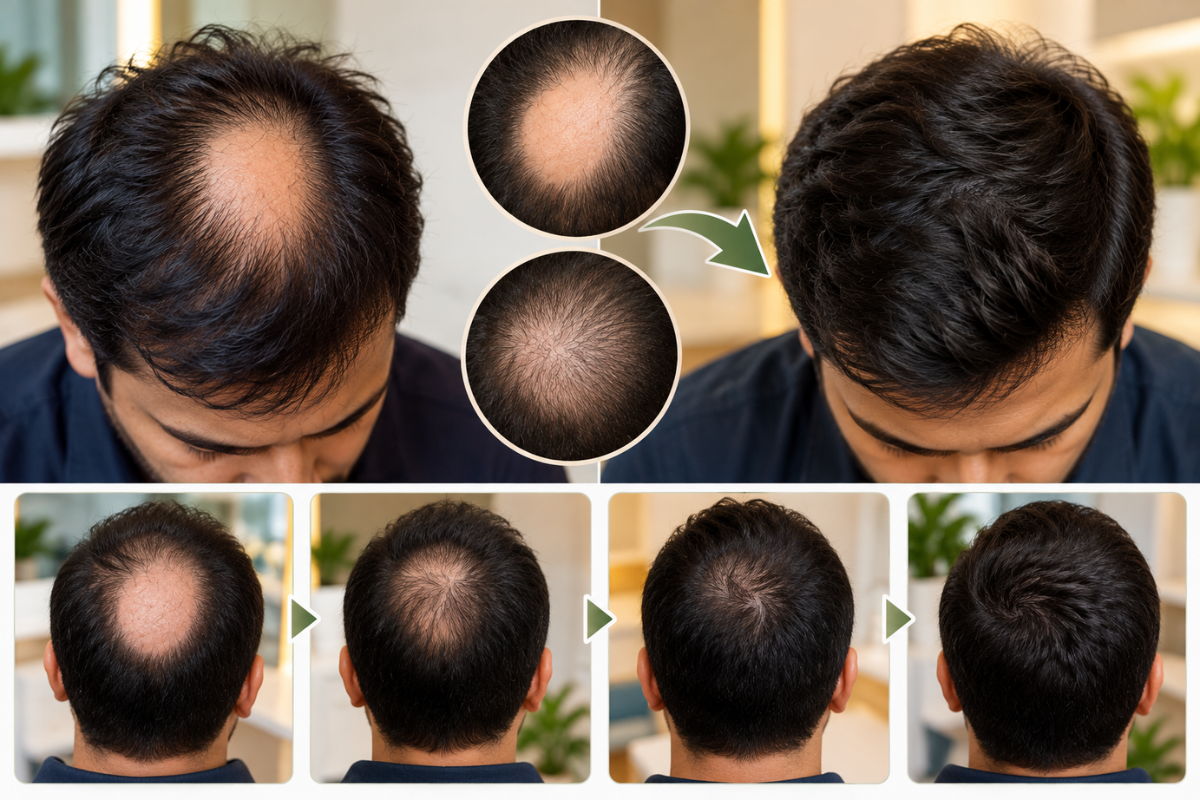
This is one of the most common questions about alopecia areata treatment, and unfortunately there is no universal timeline.
Some patients respond relatively quickly, while others require longer treatment and monitoring.
As a general guide, early signs of regrowth may become noticeable within approximately 2–3 months in responsive patients, with further improvement occurring over subsequent months. Iksana’s existing alopecia treatment information similarly notes that treatment duration varies according to the size and number of patches, selected therapy and individual response. Best Dermatologist in Delhi
What Does Early Hair Regrowth Look Like?
The first hairs appearing inside an alopecia patch may be:
- Very fine or soft
- Shorter than surrounding hair
- White or lighter in colour
- Unevenly distributed across the patch
These hairs may gradually become thicker and more pigmented as regrowth progresses.
It is also important to understand that regrowth does not guarantee that alopecia areata will never recur. Follow-up may therefore remain important even after improvement.
Can Alopecia Areata Hair Grow Back Naturally?
Yes, spontaneous hair regrowth can occur in some people with limited alopecia areata.
However, the condition is unpredictable. Some patches may regrow while new patches develop elsewhere.
If you notice that a bald patch is getting larger, new patches are appearing, or hair loss involves your beard, eyebrows or eyelashes, getting a dermatological evaluation rather than simply waiting can help establish the diagnosis and determine whether treatment is appropriate.
Why Choose Iksana Wellness for Alopecia Areata Treatment in Delhi?
For people looking for alopecia areata treatment in Delhi, Iksana Wellness provides dermatologist-led hair and scalp care at its clinic in Hauz Khas, New Delhi.
The clinic’s hair-care services include alopecia areata management, PRP, growth-factor treatments and other hair-loss treatments, with treatment selected according to individual concerns. Best Dermatologist in Delhi
Rather than approaching every bald patch in the same way, the aim is to understand the type, severity and possible contributing factors behind the hair loss before planning treatment.
When Should You Consult a Dermatologist?
Consider scheduling a hair and scalp evaluation if you experience:
- Sudden development of a bald patch
- Multiple round patches of hair loss
- Rapidly increasing patch size
- Recurrent alopecia areata
- Beard, eyebrow or eyelash involvement
- Significant or unexplained hair shedding
Early evaluation can also help distinguish alopecia areata from other causes of patchy hair loss.
FAQs About Alopecia Areata Treatment in Delhi
Not necessarily. Alopecia areata is a non-scarring type of hair loss, and hair follicles can remain capable of producing new hair. The extent and speed of regrowth vary between individuals.
Some responsive patients may notice early regrowth within approximately 2–3 months, while meaningful improvement can take several months. The timeline depends on the severity and individual response to treatment. Best Dermatologist in Delhi
Yes. Alopecia areata can cause clearly defined bald patches in the beard as well as on the scalp.
PRP may be considered as part of an individualized hair-regeneration plan in selected cases. Alopecia areata is an autoimmune condition, however, so a dermatologist should determine whether PRP, medical therapy or a combination approach is appropriate.
Stress is sometimes discussed as a possible trigger, but alopecia areata is fundamentally an autoimmune condition. It is therefore better to have sudden patchy hair loss medically evaluated rather than assuming stress is the only cause.
Yes. Alopecia areata can recur even after successful regrowth. The course of the condition varies considerably between individuals.
Iksana Wellness provides alopecia areata and other hair-loss treatments at its clinic in Hauz Khas, New Delhi. Its existing alopecia services include medical and regenerative treatment approaches selected according to individual requirements. Best Dermatologist in Delhi
Final Thoughts
Sudden patchy hair loss can be alarming, but alopecia areata does not automatically mean permanent hair loss. Because the follicles are generally preserved, regrowth can occur, although the timeline and response to treatment vary from person to person.
If you are noticing new or expanding bald patches, the first step should be identifying the cause rather than experimenting with multiple hair-growth products.
At Iksana Wellness, Hauz Khas, Delhi, alopecia areata treatment can be personalized according to the pattern, severity and progression of hair loss, helping patients take a more structured approach towards healthy hair regrowth.